
Troubleshooting 6 min readUpdated Oct 10, 2026
Split AC Error Codes and Blinking Lights: What They Mean and What You Can Safely Reset
A blinking light or a code on your split AC means the unit has run its own checks, found something wrong, and either shut down or throttled itself back. A reset clears some of these faults for good. Others will keep coming back, and restarting the unit over and over can make the underlying problem worse. On Oahu, most of the codes our techs chase down come from clogged drains, salt corrosion, overheated outdoor units, or geckos and ants getting into the control board.
Written by the Universal Air Hawaii service team, based on AC repairs across Oahu.
The short version
- A blinking light or a code means your split AC ran its own checks, found a fault, and shut down or throttled itself back.
- Photograph the display, count the blinks and note the model number before you reset anything. Many units erase the code when the power goes off.
- One reset is reasonable after a power outage or a communication fault. If the same code comes back, leave the unit off.
- Drain, sensor, fan, compressor and control board faults need a technician, not repeated restarts.
- On Oahu, most codes trace back to clogged drains, salt corrosion, overheated outdoor units, or geckos and ants in the control board.
What cooling one room actually costs on Oahu
Honolulu residential electricity runs about 43¢ per kWh, roughly 2.3 times the U.S. average. Computed at the rate above, 30 days a month. Your real cost depends on the equipment, insulation, sun exposure, thermostat setting and hours of use.
| How it runs | Per month | Per year |
|---|---|---|
| New 12,000 BTU inverter split, about 20 SEER2, 8 hrs/day | about $62 | about $743 |
| Older unit of the same size, about twice the draw, 8 hrs/day | about $124 | about $1,486 |
| New 12,000 BTU inverter split, 2 hrs/day | about $15 | about $186 |
| Any unit drawing a steady 1 kW, 8 hrs/day | about $103 | about $1,238 |
Rate as of October 2026, from the U.S. Energy Information Administration, Honolulu residential average. Try your own unit, hours and rate in our AC running cost calculator.
On this page
01Write the code down before you reset anything
Plenty of units erase the code as soon as the power goes off. Reset first and you've thrown away the most useful clue you had.
Take a photo or short video of the display or the blinking light. If it's blinking, count the flashes between pauses and note which light it is and what color. Then find the model number, which is on a sticker on the side of the indoor unit or under the front panel. It's also worth jotting down what happened right before: was the unit dripping, blowing warm air, making a noise, or did it just go dark after a storm or a power outage? With that information, a tech can often show up carrying the right part.
02How split ACs report a fault
No single code list works across brands, and codes often change between model series from the same manufacturer. Most units show a fault in one of three ways. Some put a letter-and-number code on the remote or on a small display on the indoor unit. Others blink the operation or timer light a set number of times, and the count tells you the fault. A third kind only shows on an LED on the outdoor unit's circuit board, which means taking the cover off. Leave that last kind to a tech.
Not every light is a problem. A lot of units have a filter or "clean" reminder, a timer indicator and a standby light. Look those up in the owner's manual before you assume the worst.
03Common fault types and what to do about each
Brand and code aside, almost everything a split AC reports fits one of these groups. The last column matters most.
| Fault type | What's going on | What we usually find on Oahu | Should you reset it? |
|---|---|---|---|
| Drain or float switch | Water is backing up in the drain pan | A drain line clogged with mold and sludge | No. The drain has to be cleared first |
| Indoor/outdoor communication | The two units have lost contact | Loose or corroded wiring, a power blip, pests in the board | Once. If it comes back, call |
| Temperature sensor | A sensor reading doesn't make sense | Corroded connectors near the coast, moisture | No. A tech needs to test it |
| High pressure or outdoor overheat | The outdoor unit can't get rid of heat | A dirty or salt-crusted coil, blocked airflow, a dead fan | Clear space around the unit, then call if it repeats |
| Freeze protection | The indoor coil is icing over | A clogged filter, or low refrigerant from a slow leak | Clean the filter. Call if it happens again |
| Fan motor | An indoor or outdoor fan isn't turning at the right speed | A worn motor, debris, a failed capacitor | No |
| Compressor or inverter board | A major component failed or tripped | Power surges, age, pest damage | No |
| Power or voltage | The supply voltage went out of range | Outages, storms, a weak circuit | Once. If it keeps happening, call a tech or an electrician |
Need a pro to take a look?
We'll find the cause, show you photos and quote a flat price before any work starts.
04Resetting a split AC
One reset is reasonable after a power outage, or for a communication fault when nothing else seems wrong. Turn the unit off with the remote, then switch off its breaker (or the outdoor disconnect, if you know where it is and can get to it safely). Give it a few minutes. Turn the power back on, start the unit from the remote, and stay nearby for 15 or 20 minutes to see whether the code returns.
If the same code comes back, leave it off. Repeated restarts are hard on the compressor, and they can mask a problem that's getting worse, like a drain pan about to overflow or a refrigerant leak.
05Why Oahu units seem to throw more codes
The same model can behave differently in Kapolei than in Kailua, and a handful of local conditions explain most of it.
Humidity puts a lot of water through the drain, and when the line clogs, the float switch trips and the unit stops. If water is also coming out of the unit, read our guide to split AC leaks.
Near the ocean, salt works its way into sensor plugs, wiring terminals and the outdoor coil. Sensor and communication faults can start long before anything looks rusty.
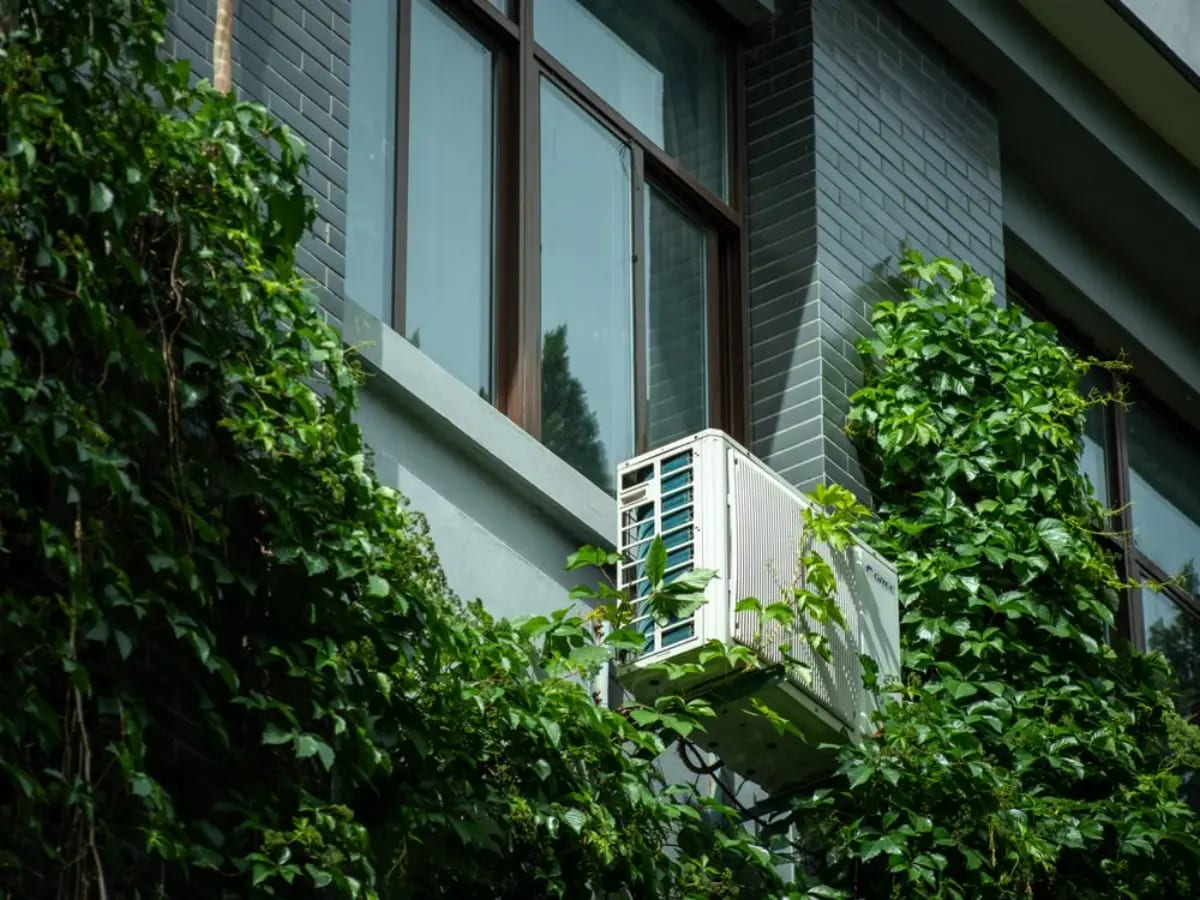
On the Leeward side, outdoor units in Ewa, Kapolei and Waianae bake on summer afternoons, especially when they face west. Add a dirty coil or a unit boxed in by plants, and the high-pressure protection starts tripping.
Geckos and ants like the warmth of a control board. When one gets across the wrong contacts, you can end up with a dead board or a code that seems to come and go at random.
Keeping the unit clean prevents a lot of this. A split AC deep cleaning plus a yearly tune-up takes care of most drain, overheating and freeze-up faults before they turn into codes.
06Codes for your specific unit
We work on every major split AC brand on Oahu. For the exact meaning of a code on your model, the owner's manual is the best reference. If you've lost it, search the model number on the manufacturer's website.
07When to call a tech
Book a visit if the same code comes back after one reset, or if the code points to the drain, a sensor, a fan, the compressor or the board. Do the same if you see ice, water or scorch marks, or smell anything burning. If the unit runs but blows warm air, go through the checks in AC not cooling first. Ice on the lines has its own guide, why an AC freezes up.
When we come out, we pull the fault with our service tools, track down what caused it, show you photos, and give you a flat price before we touch anything.
Call or text (808) 400-6593 with a photo of the code, or book a split AC repair online. If the unit has quit on a hot night and someone at home is at risk, see emergency AC repair.
Central AC or a window unit acting up instead? See our AC repair page.
Common questions
More AC guides
Hawaii know-how
Salt Air and Your AC: Preventing Corrosion on Oahu's Coast
Troubleshooting
Split AC Leaking Water Inside? Causes and Fixes in Oahu Homes
Troubleshooting
AC Not Cooling? 7 Troubleshooting Steps for Oahu Homes
Services that fix this
Split AC Repair
Blinking lights, water dripping down the wall, or a split AC that just blows warm air: we fix them all. Universal Air Hawaii repairs ductless mini-splits across Honolulu and Oahu, single-zone and multi-zone.
Learn moreSplit AC Cleaning
Musty smell, weak airflow or drips from your split AC usually mean mold and grime inside the unit. Our mini-split deep cleaning in Honolulu and across Oahu clears the coil, blower wheel and drain so your AC runs clean and cold again.
Learn moreSplit AC Installation
Split AC, also called a ductless mini-split, is the usual way to add air conditioning to a Honolulu or Oahu home that has no ducts: an outdoor condenser feeds one or more wall heads through a small hole in the wall. Universal Air Hawaii designs and installs split AC systems across the island, sized room by room and set up to hold up to salt air.
Learn moreHot house? Book an AC visit.
Book online in under a minute, call, or text. One local team for every neighborhood on Oahu.